Die Maxwell-Gleichungen, erklärt durch ein einziges Integral
Auf einen Blick
Vier Gleichungen. Mehr brauchte James Clerk Maxwell nicht, um Elektrizität, Magnetismus und Licht in einem theoretischen Rahmen zu vereinen. Die meisten Erklärungen verlieren sich entweder in komplexer Mathematik oder vereinfachen die Konzepte zu stark. Dieser Artikel schließt diese Lücke und verbindet mathematische Strenge mit visueller Intuition und einem relativistischen Ansatz, den die meisten Lehrbücher ignorieren.
Grundlagen der Maxwell-Gleichungen
Die Maxwell-Gleichungen beschreiben, wie elektrische und magnetische Felder erzeugt werden und wie sie mit Ladungen und Strömen interagieren. Sie existieren in zwei äquivalenten Darstellungen: der differenziellen Form (punktweise, unter Verwendung von Ableitungen) und der integralen Form (räumlich betrachtet, unter Verwendung von Integralen). Die integrale Formulierung ist oft intuitiver, da sie physikalisch messbare Größen beschreibt – etwa den Gesamtfluss durch eine Fläche oder die vollständige Zirkulation entlang einer geschlossenen Kurve – und nicht abstrakte Änderungsraten in einem einzelnen Punkt. Wenn Sie die Umrechnung zwischen diesen beiden Darstellungsformen üben möchten, können Sie die einzelnen Rechenschritte mit einem Integralrechner oder einem Ableitungsrechner nachvollziehen.
| Konzept | Differenzielle Form | Integrale Form | Physikalische Bedeutung |
|---|---|---|---|
| Gaußsches Gesetz (Elektrisches Feld) | ∇·E = ρ/ε₀ | ∮E·dA = Q_enc/ε₀ | Elektrische Ladungen erzeugen divergierende Feldlinien |
| Gaußsches Gesetz für den Magnetismus | ∇·B = 0 | ∮B·dA = 0 | Es existieren keine magnetischen Monopole |
| Faradaysches Induktionsgesetz | ∇×E = −∂B/∂t | ∮E·dl = −dΦ_B/dt | Ein zeitlich veränderliches B-Feld induziert ein elektrisches Wirbelfeld |
| Ampère-Maxwell-Gesetz | ∇×B = μ₀J + μ₀ε₀∂E/∂t | ∮B·dl = μ₀I_enc + μ₀ε₀dΦ_E/dt | Ein Strom und ein veränderliches E-Feld erzeugen ein magnetisches Wirbelfeld |
Die Vektordarstellung von Oliver Heaviside
James Clerk Maxwell verfasste seine Theorie ursprünglich in Form von 20 Gleichungen in Quaternionenschreibweise – einer mathematischen Notation, die heutzutage kaum noch verwendet wird. Es war der Physiker Oliver Heaviside, der in Zusammenarbeit mit Josiah Willard Gibbs dieses komplexe System auf die vier eleganten Vektorgleichungen reduzierte, die wir heute in der Schule und Universität lernen. Heaviside führte dabei auch die Divergenz- und Rotationsoperatoren in ihrer modernen Form ein und komprimierte die Gleichungen so stark, dass sie problemlos auf ein T-Shirt gedruckt werden können.
Von Quaternionen zu Vektoren
Heavisides Neuformulierung war keineswegs nur eine rein kosmetische Anpassung. Durch die saubere Trennung der Vektorfelder in separate Divergenz- und Rotationsoperationen legte er die fundamentale Symmetrie zwischen Elektrizität und Magnetismus offen – eine Symmetrie, die in der klassischen Physik einzig durch das Fehlen magnetischer Monopole gebrochen wird.
Die integrale Form: Eine Gleichung für fast alles
Betrachten wir das Gaußsche Gesetz. In seiner integralen Form besagt es, dass der gesamte elektrische Fluss durch eine geschlossene Oberfläche direkt proportional zu der von dieser Fläche eingeschlossenen elektrischen Ladung ist. Dieses einzige Integral beschreibt eine Fülle von Phänomenen: Warum beispielsweise ein statisch aufgeladener Luftballon an der Wand haften bleibt, oder wie ein Van-de-Graaff-Generator hohe Spannungen aufbaut. Sie können derartige Oberflächenintegrale mit einem Rechner für Mehrfachintegrale selbst berechnen.
Visuelle Intuition: Die expandierende Kugel
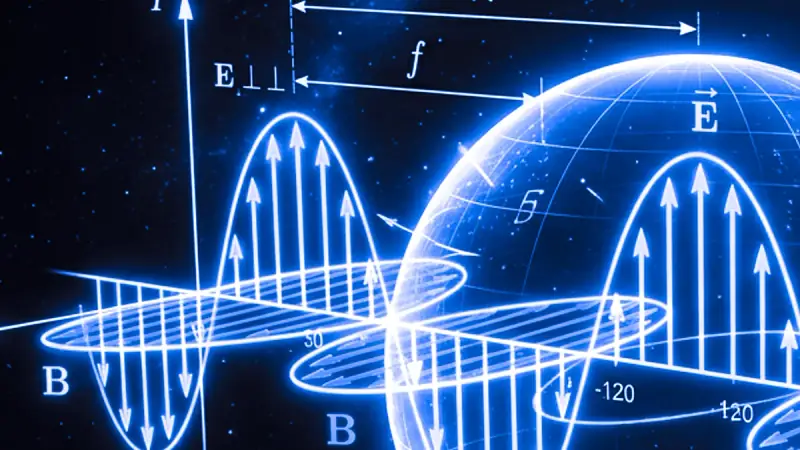
Stellen Sie sich eine Punktladung im Zentrum einer sich stetig ausdehnenden Kugel vor. Während die Kugel wächst, nimmt ihre Oberfläche mit dem Quadrat des Radius zu. Gleichzeitig nimmt die elektrische Feldstärke exakt im selben Verhältnis ab. Folglich bleibt der Gesamtfluss durch die Kugeloberfläche stets konstant. Dies ist der geometrische Ursprung des Abstandsquadratgesetzes (reziprokes Quadratgesetz), und exakt dieser Zusammenhang wird durch die integrale Form des Gaußschen Gesetzes mathematisch beschrieben.
Das Paradoxon des Kondensators und der Verschiebungsstrom
Das ursprüngliche Ampèresche Gesetz funktionierte einwandfrei für konstante Gleichströme, versagte jedoch bei einem sehr spezifischen Fall: dem Aufladen eines Kondensators. Der Strom fließt in die eine Kondensatorplatte hinein und aus der anderen heraus, obwohl sich zwischen den Platten ein isolierendes Vakuum (oder Dielektrikum) befindet. Da dort keine Ladungsträger fließen, stellte sich die Frage: Wie kann um diesen Spalt herum überhaupt ein Magnetfeld entstehen?
F: Was versteht man unter dem Paradoxon des Verschiebungsstroms beim Kondensator? > A: Es beschreibt einen offensichtlichen Widerspruch: Das Ampèresche Gesetz sagt die Existenz eines Magnetfeldes um den stromführenden Draht voraus. Da jedoch im Zwischenraum der Kondensatorplatten physikalisch keine Ladungen fließen, dürfte dort laut Ampère auch kein Magnetfeld existieren – was der Realität widerspricht.
Maxwell löste dieses Problem durch die Einführung des sogenannten Verschiebungsstroms. Er erkannte, dass sich das zeitlich veränderliche elektrische Feld zwischen den Platten hinsichtlich der Erzeugung eines Magnetfeldes genauso verhält wie ein echter elektrischer Strom. Diese geniale Erweiterung vervollständigte nicht nur das Gleichungssystem, sondern führte Maxwell ganz nebenbei zu der theoretischen Vorhersage, dass es sich bei Licht um elektromagnetische Wellen handeln müsse.
Der Rotationsoperator und die Schaufelrad-Analogie
Die Rotation (Rotor) ist ein Maß für die lokale Wirbelstärke in einem Vektorfeld. Stellen Sie sich vor, Sie setzen ein winziges Schaufelrad in die Strömung dieses Feldes: Beginnt sich das Rad um seine eigene Achse zu drehen, so ist die Rotation an diesem Punkt ungleich null. Das Faradaysche Induktionsgesetz besagt, dass ein sich änderndes Magnetfeld ein solches zirkulierendes elektrisches Wirbelfeld erzeugt – vergleichbar mit einem Wasserstrudel, der unser Schaufelrad antreibt. Diese Analogie macht eine abstrakte mathematische Operation anschaulich und greifbar. Die zugrundeliegende Mathematik der Änderungsraten ist prinzipiell identisch mit den Berechnungen, die Sie in einem Ableitungsrechner durchführen würden.
Die relativistische Perspektive: Magnetismus als relativistische Elektrostatik
Kommen wir zu einem faszinierenden Aspekt der Physik: Streng genommen ist der Magnetismus gar keine separate Grundkraft der Natur. Betrachten wir ein System aus dem Bezugssystem einer bewegten elektrischen Ladung in der Nähe eines stromführenden Leiters. Aufgrund der speziellen Relativitätstheorie kommt es zu einer Lorentzkontraktion: Für den bewegten Beobachter verschieben sich die Abstände zwischen den positiven und negativen Ladungsträgern im Draht asymmetrisch. Dieses minimale Ungleichgewicht in der Ladungsdichte ruft eine Kraft hervor, die aus der Perspektive des bewegten Beobachters rein elektrostatisch ist. Was wir im Alltag als „Magnetismus“ bezeichnen, ist unter diesem Blickwinkel nichts anderes als Elektrostatik, betrachtet durch die Linse der Relativitätstheorie.
Hierbei handelt es sich nicht bloß um eine Metapher. Es ist eine unausweichliche Konsequenz, wenn man die Maxwell-Gleichungen mit der speziellen Relativitätstheorie verknüpft. Aus genau diesem Grund beginnt Albert Einsteins berühmte Veröffentlichung zur Relativitätstheorie aus dem Jahr 1905 auch explizit mit der Betrachtung der Elektrodynamik bewegter Körper.
Wo der klassische Elektromagnetismus an seine Grenzen stößt
Die Maxwell-Gleichungen zeichnen sich durch ihre enorme Zuverlässigkeit aus. Dennoch bleiben sie eine klassische Theorie und können quantenmechanische Phänomene nicht abbilden. Auf mikroskopischer Ebene machen Vakuumfluktuationen und die Teilchennatur des Lichts (Photonen) die Anwendung der Quantenelektrodynamik (QED) zwingend erforderlich, um präzise Vorhersagen zu treffen. Ohne solche quantenphysikalischen Erweiterungen scheitert die klassische Elektrodynamik auch an der Erklärung des photoelektrischen Effekts oder der Schwarzkörperstrahlung. Mathematisch ist dieser Zusammenbruch vergleichbar mit einem Grenzwert, der an einer bestimmten Randbedingung plötzlich seine Stetigkeit verliert.
Ivor Catt und die Debatte um Heavisides Signaltheorie
Der Ingenieur Ivor Catt vertrat die umstrittene These, dass elektrische Energie sich in Schaltkreisen nicht in Form von herkömmlichem „Strom“ durch die Drähte bewegt, sondern vielmehr als elektromagnetische Welle durch den Raum zwischen den Leitern transportiert wird. Hierbei berief er sich direkt auf Oliver Heavisides eigene Publikationen zum Energiefluss (dem Poynting-Vektor). Zwar bleibt diese Sichtweise eine Randmeinung, in der Praxis des Hochgeschwindigkeits-Digitaldesigns reißt die Debatte jedoch nicht ab: Bei Frequenzen im Gigahertz-Bereich spielt die Signalintegrität eine derart kritische Rolle, dass einfache klassische Schaltkreismodelle zunehmend an ihre Grenzen stoßen.
Häufig gestellte Fragen (FAQ)
F: Wer hat die vier berühmten „Maxwell-Gleichungen“ eigentlich aufgeschrieben? > A: James Clerk Maxwell formulierte die grundlegenden physikalischen Prinzipien. Oliver Heaviside war es jedoch, der die Theorie in die elegante und kompakte Form der vier Vektorgleichungen überführte, die wir heute kennen.
F: Ist Magnetismus eine echte physikalische Kraft oder nur eine Folge der Relativitätstheorie? > A: In der Physik haben beide Betrachtungsweisen ihre Berechtigung. Der Magnetismus ergibt sich als natürliche Konsequenz aus der Elektrostatik, sobald man die relativistischen Effekte bei bewegten elektrischen Ladungen berücksichtigt.
F: Warum ist der Verschiebungsstrom von so großer Bedeutung? > A: Ohne den Verschiebungsstrom wären die Maxwell-Gleichungen im Falle zeitlich veränderlicher Felder physikalisch unvollständig und mathematisch widersprüchlich. Zudem hätte ohne diesen Term die Existenz elektromagnetischer Wellen – und damit auch die Natur des Lichts – theoretisch nicht vorhergesagt werden können.
Fazit
Die Maxwell-Gleichungen sind weit mehr als ein bloßes Formelwerk zum Auswendiglernen. Sie schlagen eine fundamentale Brücke zwischen Geometrie, der Integral- und Differentialrechnung und der innersten Struktur von Raum und Zeit. Von Heavisides Vektordarstellung bis hin zur Einbettung in Einsteins Relativitätstheorie: Wer diese vier Gleichungen versteht, der versteht ein Stück weit, nach welchem Bauplan unser Universum funktioniert.
Möchten Sie die komplexen Berechnungen von Flüssen, Rotationen und Änderungsraten, die diesen physikalischen Gesetzen zugrunde liegen, selbst üben? Nutzen Sie die kostenlosen Online-Tools von Mathsway: Unsere Integralrechner, Rechner für Mehrfachintegrale, Ableitungsrechner und Grenzwertrechner bieten Ihnen detaillierte, schrittweise Lösungswege.